White crystals creeping up the plaster beneath a window. A patch of blue that curls at its edges like a dried leaf. A crack you are sure was thinner last spring. Rural frescoes rarely fail in a single dramatic moment. They fail slowly, in a barn chapel with no heating, in a farmhouse loggia open to the wind, in a parish church whose roof has been patched four times. The damage is usually well advanced by the time someone notices colour on the floor.
You do not need a degree in conservation to spot the early signals. You need a torch, a notebook, and the patience to look at the same wall twice a year. What follows is a working checklist: what to examine, what each sign probably means, and which ones should send you looking for a conservator rather than a ladder.
Before you diagnose anything, learn the room. Come back at a different hour if you can, because raking daylight shows surface distortion that flat light hides. Bring a small torch and hold it almost parallel to the wall, sweeping slowly; lifted paint and shallow hollows appear as sharp shadows that vanish when you face the wall directly.
A basic kit is enough:
Keep your hands off the surface. Fingers carry oils and salts, and a flake that looks attached can detach under the lightest pressure. If you must get close, keep your breath off the paint as well.
Look for fluffy white or greyish crystals at the base of the wall, around doorways, along the line where damp rises, or in a band beneath a leaking gutter. Salts migrate with moisture and crystallise just under the paint, pushing it outward. A bloom that comes and goes with the seasons is active. If the plaster around it feels crisp, or the colour above it is lifting, treat it as urgent.
Paint that curls at the edges, scales like fish skin, or lifts into small tents is detaching from the plaster beneath. Powdering is quieter: the surface looks dusty, colour rubs away as a fine pigment, and the image loses definition without any visible crack. Both mean the bond between paint layer and support has failed. Neither improves on its own.
Gently tap the wall with a knuckle, moving in a slow grid, and listen. A dull thud suggests sound plaster; a hollow answer means the layer has separated from the masonry behind. Note the outline of hollow areas on a sketch or photograph. If the hollow zone grows between visits, or sits above a doorway where people pass, it needs prompt attention.
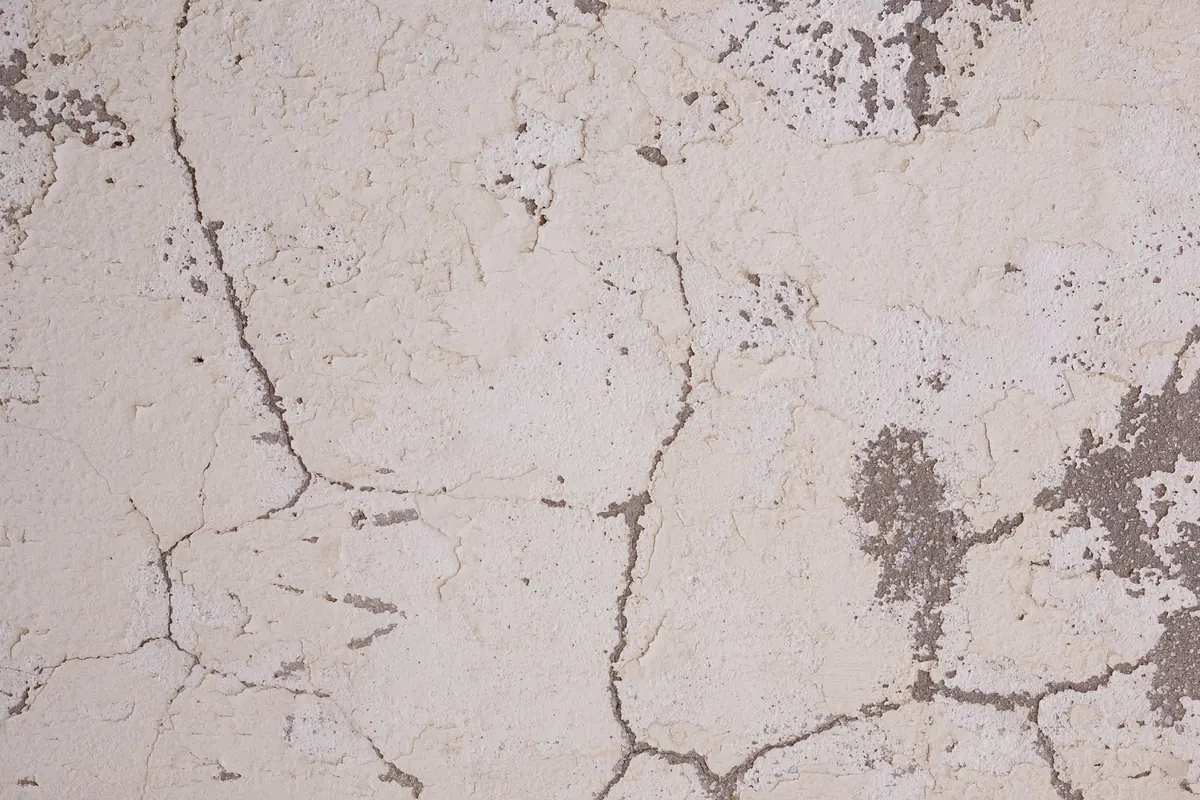
Not every crack is serious. Hairlines in the render are common and often stable. Watch instead for cracks that step diagonally, follow the joints of the masonry, or are visibly wider at one end. Photograph them with a scale, then re-photograph from the same spot in three months. A simple tell-tale — a small bridge of plaster or a thin strip of paper glued across the crack by a conservator — will show movement far more reliably than memory.
Brown rings, darkened patches, a rising band at the base, or a damp smell in the room all point to water. Trace it outward rather than staring at the painting: a broken downpipe, a slipped roof tile, ground level raised above the interior floor, a blocked gully, a cement render trapping moisture in the wall. Repainting the fresco without fixing the source is wasted effort.
Dark speckling, a green film, or furry growth on exterior plaster usually signals persistent moisture and poor air movement. Do not scrub it. Spores and roots sit in the pores, and dry brushing can spread both the growth and the pigment.
An image that looks foggy, chalky or suddenly pale may be blanching — a surface change often linked to moisture and salts. Yellowing, glossy patches or a dark, sooty veil suggest old coatings or candle smoke. Any of these makes the painting harder to read and harder to treat later.
Cement pointing, gypsum patches, hardware-store sealants, screws and nails, acrylic fixatives that have turned shiny or yellow, non-breathable paint applied over the fresco: these are red flags in their own right. Cement and plastic coatings trap moisture, and the damage usually appears at their edges first.
The urge to help is understandable, and almost every well-meant intervention makes a conservator's job harder. In the weeks before a professional assessment:
Good records are half the diagnosis. Photograph the whole wall, then each flagged area, always from the same position and at the same time of day, with a scale in frame. Write down the date, the weather, and whether the surface felt damp. Keep the folder together with your humidity readings.
That baseline does something no single inspection can: it turns a static worry into evidence. A salt bloom that returns after three dry weeks, a hollow patch that has widened by a hand's width, a crack that has doubled — these are the details a conservator needs to judge urgency, and the details that help when you apply for advice or funding.
Get professional eyes on the fresco if paint is actively falling, if hollow areas are larger than your palm or sit above where people walk, if a crack is visibly widening, or if salts and damp keep returning after the building has been made weathertight. In Italy, a good first port of call is the local heritage superintendency office, the diocese's cultural heritage office for church buildings, or a regional conservation studio; ask for someone with documented experience of wall paintings, not general building repair.
Between that call and the site visit, do nothing dramatic. Keep the room ventilated but stable, fix the obvious water sources if it can be done without touching the painted wall, and keep taking photographs. Rural frescoes reward attention more than action — the earlier you notice, the more of the image survives.
Photo: Emmanuel Correia / Pexels