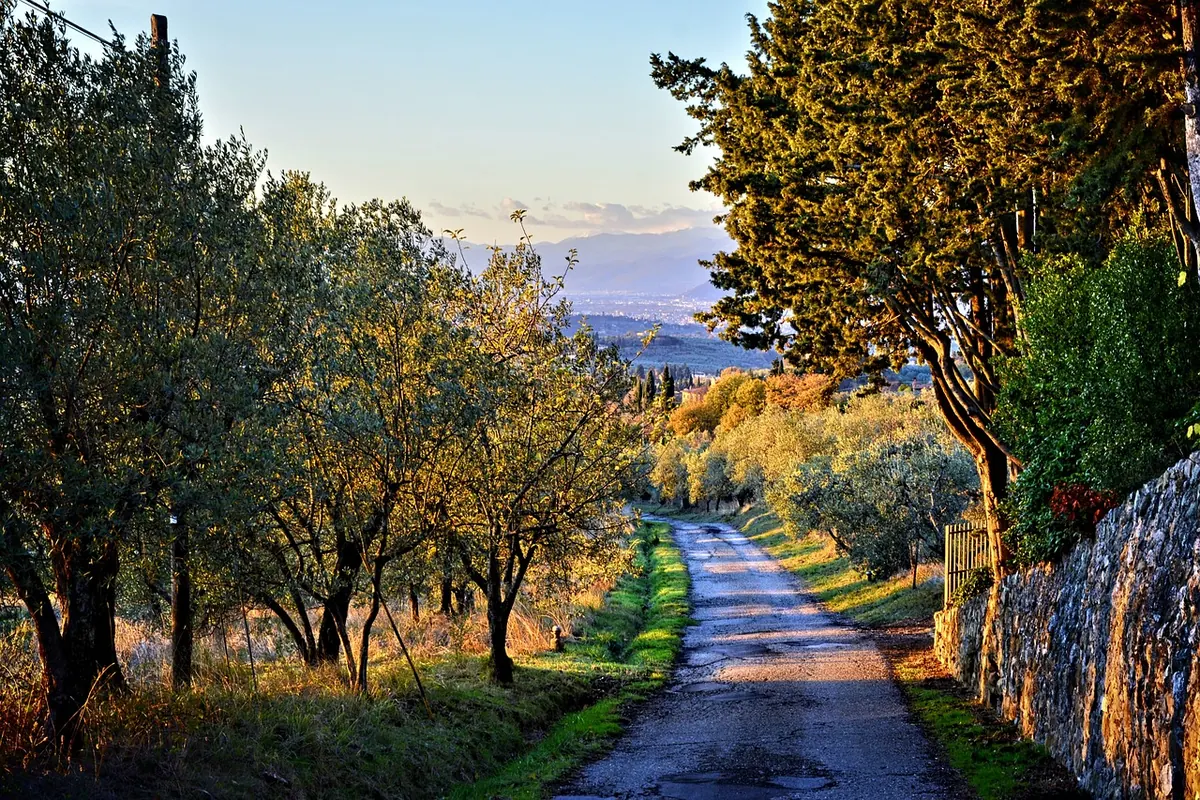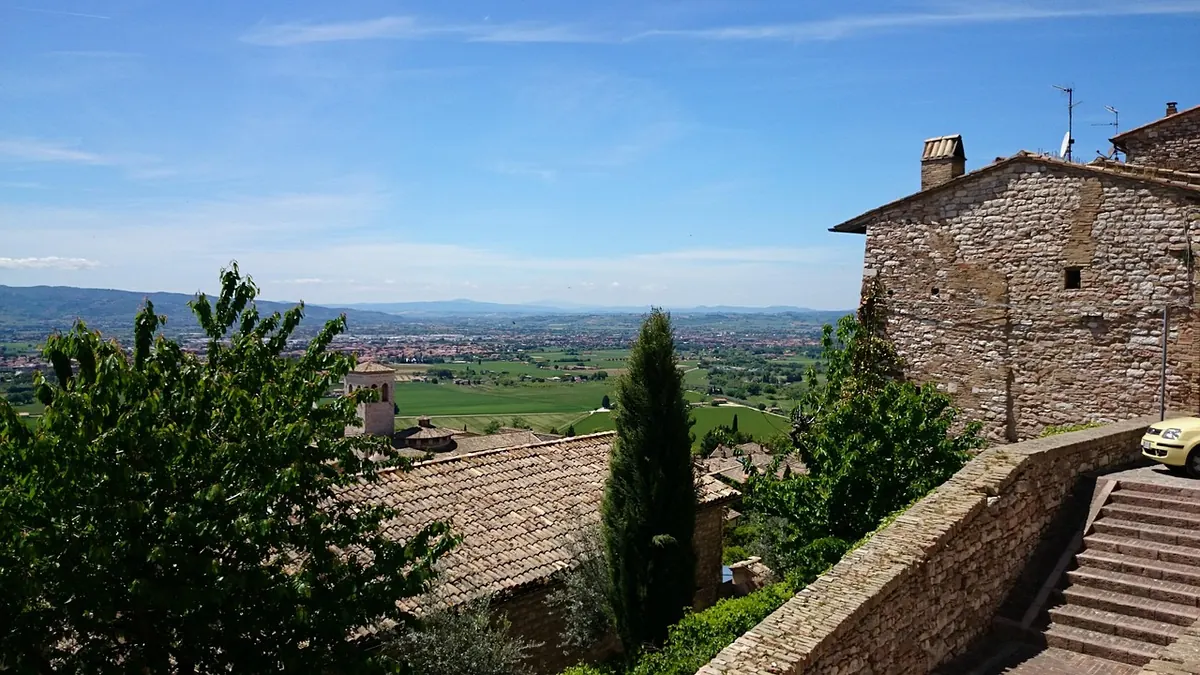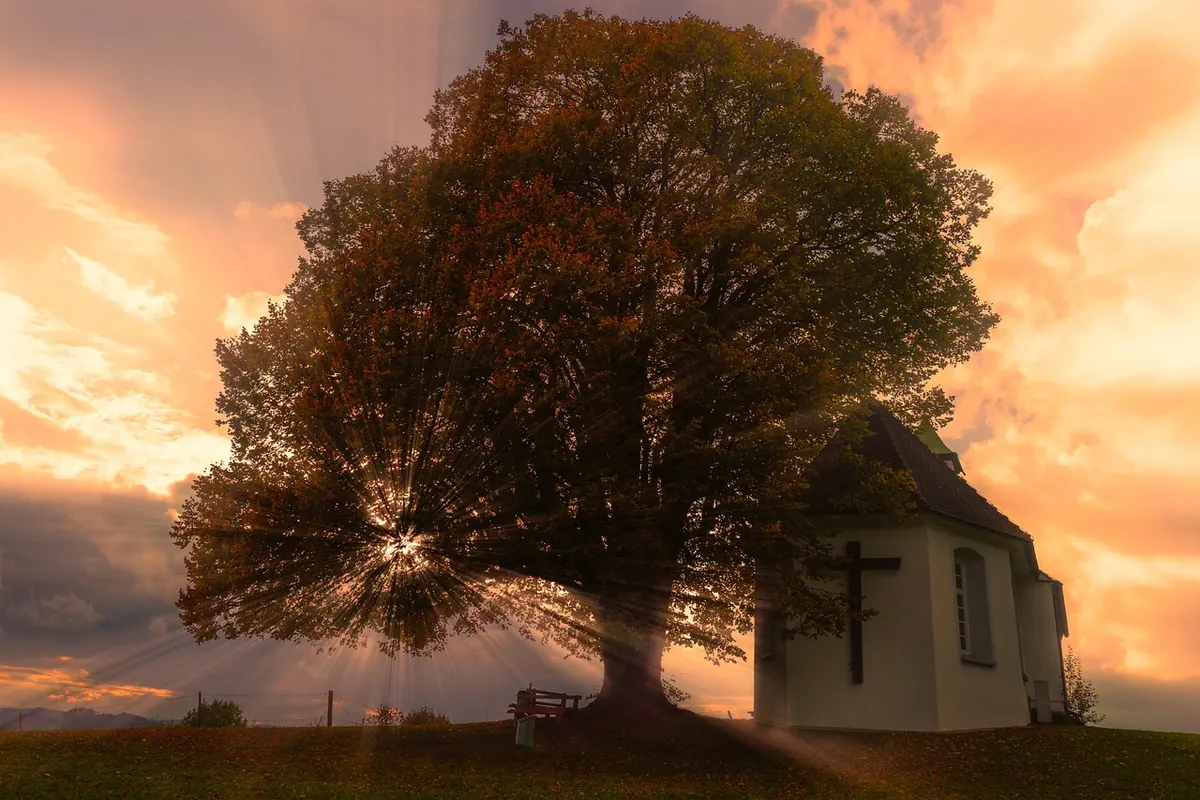
The same chapel at the bend of a white road can look like two different buildings in May and in November. In spring the sun is already high enough by nine in the morning to throw a flat, even light across the counterfacade. By late autumn it comes in almost horizontally from the south-west, skimming the plaster, and the seams between one day's work and the next are suddenly visible from the doorway.
Rural frescoes are seldom behind glass and almost never lit by anything but the sky. That is both their charm and their difficulty. What you actually see depends on the season, on whether the hay has been cut, on whether the door is open, and on whether the person who keeps the key is at the market or out in the field.
In March the sun is still low enough to reach deep into a nave through a south window, landing on walls it will not touch again until October. By April the angle has lifted and midday light starts to flatten; by May the middle of the day is already the worst time to look at anything. Aim for roughly eight to ten in the morning or late afternoon.
Spring is also when small buildings come back to life. Easter, the spring patron saint days and the first confirmations and weddings of the year mean that oratories locked since November are swept, aired and opened. Processions pass the votive shrines at the crossroads, and those shrines get a fresh coat of paint and a bunch of flowers. If you want to see a fresco that is normally shut away, this is the season to ask.
One caution: stone churches hold winter moisture for weeks. In a cold, unheated interior the plaster can read grey and the colours muddy, especially on north walls. Give the building an hour with the door open before you judge the painting, and visit in the late morning rather than at opening time.
From June to August the light at noon is directly overhead and the fresco goes quiet. Pigment looks bleached, shadows disappear, and photographs come out disappointing even when the painting is superb. Work around it: before nine and after five are your hours, and a west-facing wall or window can give you the finest light of the entire year in the last hour before dusk.
High summer is the moment to look at what the fresco cannot show you: the architecture around it. With the sun overhead, the planes of a loggia, the reveals of a window and the thickness of a wall become readable, and you can see how the painter used the shape of the room. It is also the moment when painted architectural illusion, so common in rural chapels, either works or falls apart. Step back to the doorway and check.
The farming calendar is against you. Hay in June, wheat and apricots in July, sunflowers later; lanes are busy with tractors and trailers, farmyards are in use, and the person with the key may be three fields away. The August fortnight empties many villages entirely. On the other hand, summer is feast season: patron saint processions, flower carpets in the street, banners on the facade. Crowds, but also open doors and a village prepared to show itself off.
Heat brings its own rules. Do not lean on or touch a painted wall; sweat, sunscreen and insect repellent all transfer, and lime plaster is softer than it looks. Keep a little distance, especially when a small church fills up.
September to November is the season for looking closely. The sun drops week by week until it grazes the walls, and raking light is what reveals how a fresco was actually made.
The countryside is busy in a different way now: grapes in September and October, olives from late October, chestnuts higher up. Lanes narrow to a single track beside trailers, and small festivals fill the weekends. Mornings can be foggy and clammy, which makes an unheated interior cold and slightly dark; midday, once the door has stood open for a while, is usually the best window. Autumn is also when many parishes finally get round to cleaning and small repairs, so check for scaffolding before you travel.
From December to February the trees are bare and sightlines open up. A campanile or a hillside shrine hidden by foliage all summer is suddenly obvious, and you can trace how a remote chapel relates to the farm below it. The low winter sun through a south window can push a slab of light right across the north wall of a nave — a moving rectangle that shows a fresco in a way no other season allows.
Winter is also when the Christmas cycle is worth the cold. Nativity scenes, the Adoration of the Magi, and the monthly labours of the year — pruning in February, the pig kill in January, harvesting in July — are painted calendars of rural work. Reading them against the actual fields outside is one of the quiet pleasures of a winter visit.
Bring warm clothes, wear soft shoes and carry a small torch. Ask before using it and never use a flash. Condensation is the real enemy: a cold church filled with warm visitors will mist up, and repeated damp is bad for plaster. Short opening hours are normal, and hill roads can close.
Take binoculars. Half the interest of a rural fresco is in the upper register, and a small pair turns a distant row of saints into something you can actually study. Dress for stone: even in July a thick-walled church is cool, and in winter it is colder inside than out. Carry water in summer and a waterproof layer in autumn.
Leave a donation, however small, and sign the visitors' book if there is one — it is often the evidence a small parish uses when arguing for maintenance. Ask before photographing, respect any restriction, and never touch the plaster or lean on a painted sill. If you notice fresh damp, salt bloom or flaking, mention it to whoever holds the key; local volunteers often have no idea until someone points it out. Villages notice careful visitors, and a polite question about opening hours is usually repaid with a story about the painting that no guidebook contains.
Photo: 2780243 / Pixabay